
Begin Beside the Lake
Arrive among mountain light and villa-lined shores, explore Bellagio from the water on an included private boat experience, and ease into Italy with a hosted welcome dinner and an open afternoon.

Now Journey grand journey
The Complete 14-Day North-to-South Italian experience.
No obligation. No pressure.
Choose your Journey
Italy's Great Cities is offered in three thoughtfully crafted small group journeys, each built around the same Now Journey philosophy of elegant pacing, exceptional hospitality, and meaningful experiences. Whether you prefer our Essential Journey from Venice to Rome, our flagship Signature Journey from Venice to the Amalfi Coast, or our Grand Journey from Lake Como to the Amalfi Coast, simply choose the edition that best fits your time and travel style.
Three ways to experience Italy’s Great Cities. Choose the Journey that best fits your time and travel style.
Journey at a Glance
From Lake Como to the Amalfi Coast, one beautifully paced journey.
Scroll through citiesSwipe through cities
Italy was never meant to be rushed
Your Journey begins with an elegant Lake Como prologue before the story of Italy's Great Cities unfolds through Venice, Florence, Tuscany, Rome and the Amalfi Coast.
Lake Como is not an added stop. It is the graceful opening note: a quiet arrival into Italy by water, mountain light and villa-lined shores before the great cities begin.
"Every day, every place, every meal, every experience was amazing." Edward K., Now Journey guest
Why travelers choose Now Journey
A true small group of 8–12 guests, with a maximum of 16. Hotels in the heart of each destination, thoughtfully arranged transportation and sightseeing, priority admissions where available—and no upselling while you’re on tour.
Read Our TripAdvisor ReviewsSix destinations. One complete Italian arc.
Fourteen days create room for an elegant Lake Como opening, Italy’s great cultural chapters, and a relaxed southern finale beside the Bay of Naples.
Arrive among mountain light and villa-lined shores, explore Bellagio from the water on an included private boat experience, and ease into Italy with a hosted welcome dinner and an open afternoon.
Travel through Milan by high-speed rail, arrive by private water taxi, then discover San Marco and experience an evening gondola ride accompanied by live musicians.
Meet Michelangelo’s David and explore Florence’s historic center with an expert guide, balanced by an intentionally open afternoon for discoveries of your own.
Toast with Vernaccia in San Gimignano, linger over a winery lunch and tasting at a family-run estate, then enjoy a full day at your own pace in Cortona.
Experience Old Rome, Vatican City and Imperial Rome with expert guides while a free afternoon, evening walks and a hosted farewell dinner keep the Eternal City personal.
An expert-guided Pompeii visit leads into Sorrento, where a Tour Captain Discovery Walk, an open coastal day and a farewell Apericena close the Journey.
14 Days from Lake Como to the Amalfi Coast
See exactly how each day unfolds—from a private boat perspective on Lake Como to Pompeii, Sorrento and the final days beside the Bay of Naples.
Chapter One
Days 1–2
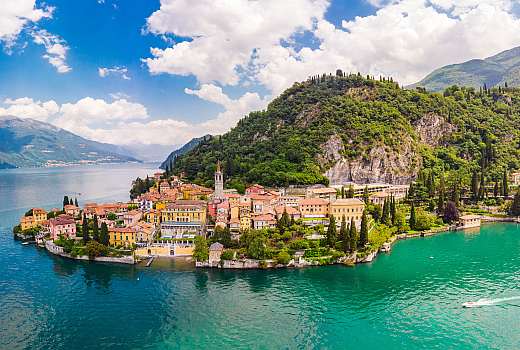
The Grand Journey opens beside the lake: mountain light, elegant villages, a private boat perspective and two unhurried days before Italy’s great cities begin.
Lake Como gives the Journey room to begin gently. The first chapter balances a warm welcome, shared discoveries and time to settle into the rhythm of Northern Italy.
Day 1
Arrive in Lake Como and settle into your lakeside hotel. Later, meet your Tour Captain and fellow travelers for an orientation and Discovery Walk before the group’s welcome dinner.
Day 2
After breakfast, explore Lake Como with your Tour Captain, including time in Bellagio and an included private boat experience that reveals the shoreline from the water.
The afternoon is open to linger in town, relax at the hotel or follow your Tour Captain’s recommendations.
Lake Como: Hotel Villa Belvedere or similar, selected for an elegant opening beside the lake.
Other Deluxe hotels we sometimes use: Grand Hotel Villa Serbelloni, Grand Hotel Cadenabbia or similar.
“Lake Como is the prologue: calm, beautiful and deliberately unhurried before the great-city chapters begin.”HOW WE CHOOSE
Chapter Two
Days 3–4
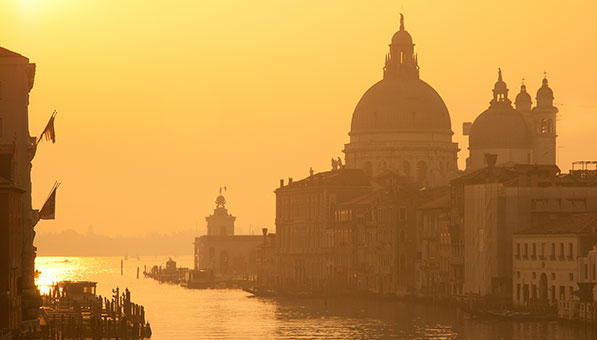
The Journey begins on water: a private arrival, San Marco light, hidden passages, music on the canals and the strange, impossible beauty of a city that should not exist.
Venice is less an introduction than a spell. The first days are designed to orient you gently—not by rushing from site to site, but by letting the city reveal its rhythm.
Day 3
After breakfast, leave Lake Como for Milan and continue by high-speed train to Venice. On arrival, a private water taxi carries you from the station through the canals to your hotel.
After time to settle in, meet your Tour Captain for a Discovery Walk through the St. Mark’s area before sharing a welcome dinner in Venice.
Day 4
With an expert local guide, explore the St. Mark’s area and Venice’s layered history, including St. Mark’s Basilica, the Doge’s Palace, the historic prisons and the Bridge of Sighs. The day is designed to reveal Venice not as a postcard, but as a republic shaped by power, intrigue, faith and extraordinary beauty.
Later, as Venice begins to glow in the evening light, glide through the city’s quieter canals on the included gondola experience, accompanied by live musicians.
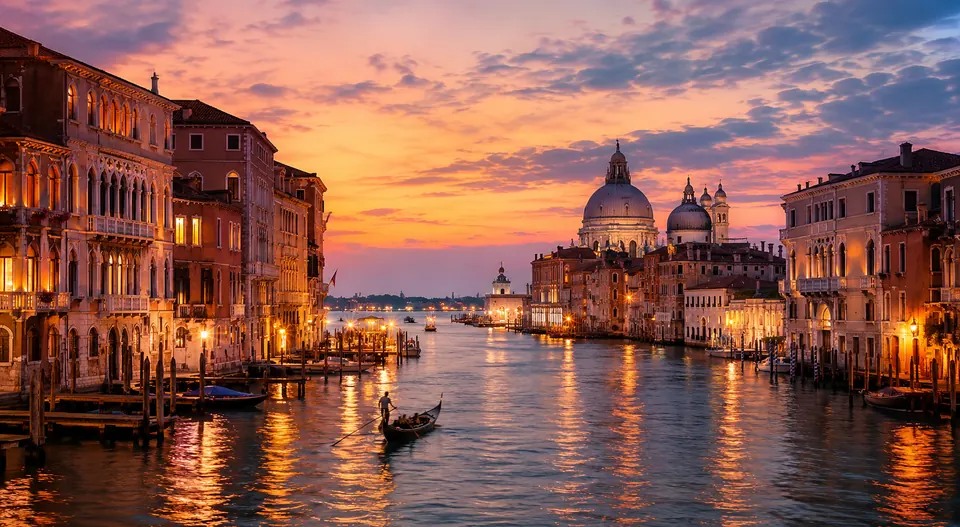
Venice: Hotel Saturnia & International or similar. This refined, family-owned stay keeps you within easy reach of St. Mark’s while supporting the best kind of Venice evening: a quiet wander after the day visitors have drifted away.
Other Deluxe hotels we sometimes use: Monaco & Grand Canal or similar.
“This is the kind of Venice hotel I love: close enough to wander to St. Mark’s Square, but tucked into a quieter rhythm where the city feels like it belongs to you for the evening.”HOW WE CHOOSE
Chapter Three
Days 5–6
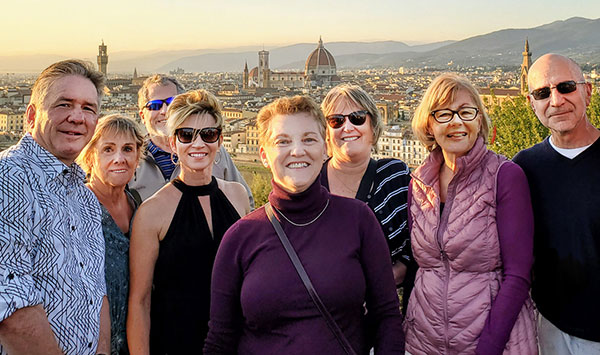
Venice fades behind you. Florence arrives with bells, stone, Renaissance proportion, river light, artisan windows and the quiet confidence of a city that changed the world.
Florence is approached with elegance: by water, rail and then on foot. The days balance guided discovery with space to wander, shop, sit, sip and look up.
Day 5
A private boat transfer brings you to Venezia Santa Lucia, where you board a comfortable high-speed train bound for Florence—a seamless transition from lagoon light to Renaissance stone.
Upon arrival, your Tour Captain leads a Florence Discovery Walk through the historic center, including Giotto’s Campanile, the Baptistery, the Duomo and Ponte Vecchio. That evening, gather for a hosted Tuscan dinner.
Day 6
Begin at the Accademia Gallery with Michelangelo’s David, then continue through the historic center with your guide: Santa Maria del Fiore, Giotto’s Bell Tower, the Baptistery, the Gates of Paradise, Piazza della Signoria and Piazza della Repubblica.
The afternoon is intentionally open: time to wander, shop, linger over lunch, visit Santa Croce, choose another gallery or simply look up.
This evening, your Tour Captain may invite you to join the group for an optional dinner, or the evening is entirely yours.
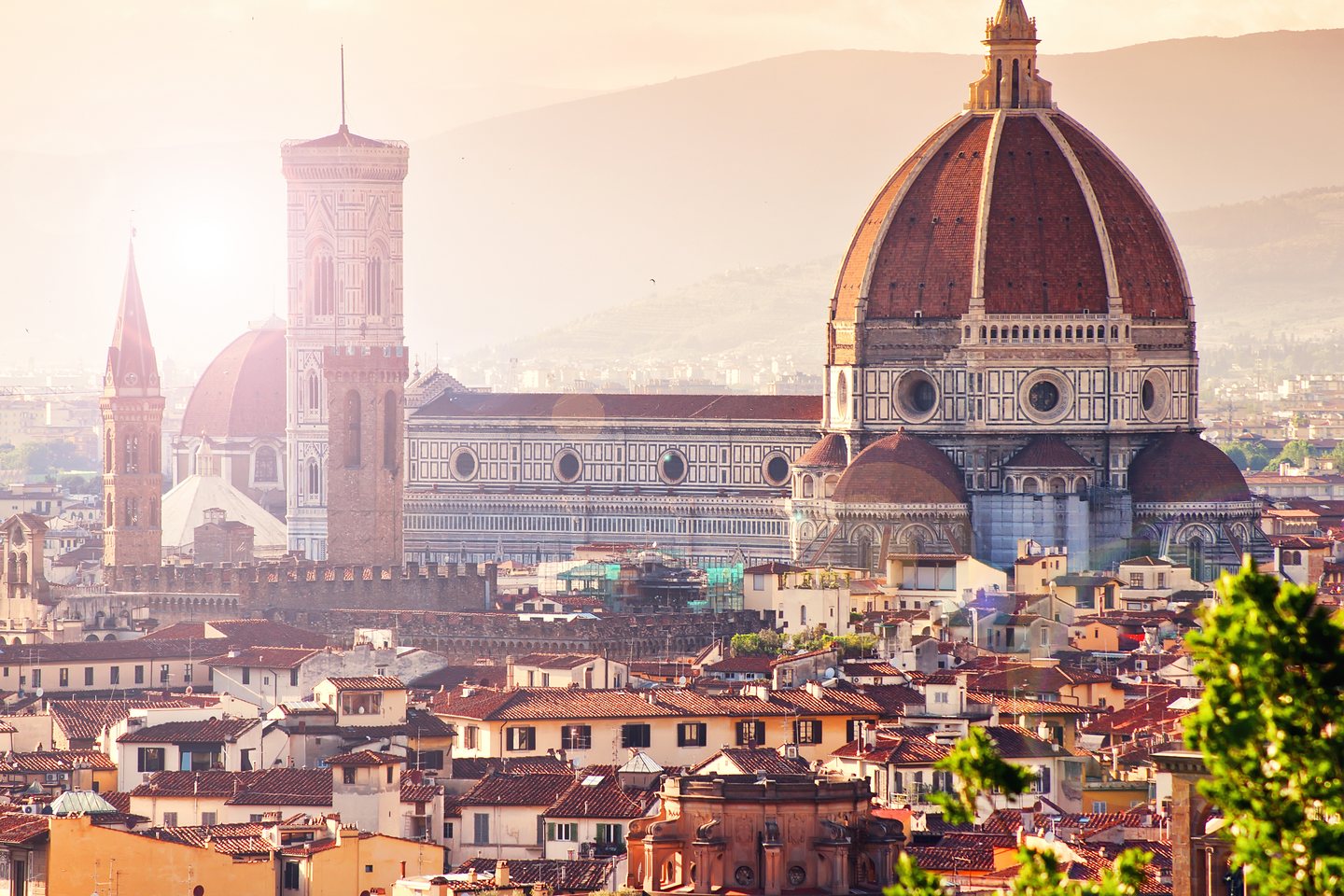
Florence: Grand Hotel Cavour or similar. This historic city stay places the Renaissance chapter close to Florence’s treasures, with rooftop views and a central setting that keep the city present even between guided moments.
Other Deluxe hotels we sometimes use: Bernini Palace, Hotel L’Orologio or similar.
“In Florence, the right hotel should keep the Duomo, the river, the piazzas and the evening streets within easy reach. The city is best when you can step back into it after dinner.”HOW WE CHOOSE
Chapter Four
Days 7–8
Vine-covered hills, a white wine toast in San Gimignano, a family-run estate, Cortona at golden hour and the permission to slow down.
Tuscany is the hinge of the Journey: a shift from major-city wonder into countryside texture, regional life and time that feels less scheduled.
Day 7
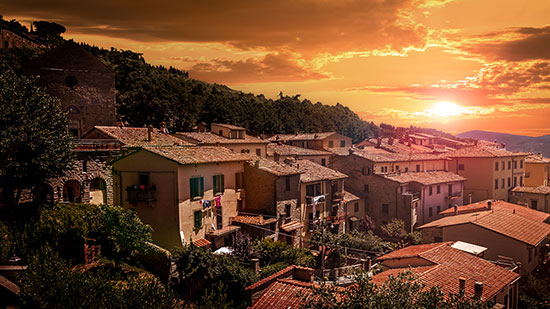
The landscape shifts as rolling hills and cypress trees guide you into the Tuscan countryside. Begin in San Gimignano, famed for its medieval skyline and artisan streets, with a toast of Vernaccia, the town’s signature white wine.
Settle into a family-run Tuscan estate for a guided cellar visit, curated tasting and leisurely farm-to-table lunch. Later, continue to Cortona, where your Tour Captain handles check-in before leading a gentle Discovery Walk into the historic center.
Day 8
Enjoy a full day at leisure in Cortona. The day can be as quiet or active as you wish: a long piazza morning, a countryside walk or time exploring Cortona’s upper streets and Etruscan layers.
Your Tour Captain can help shape the day around your style, and the evening remains open for an unhurried night in one of Tuscany’s loveliest hill towns.
This evening, your Tour Captain may invite you to join the group for an optional dinner, or the evening is entirely yours.
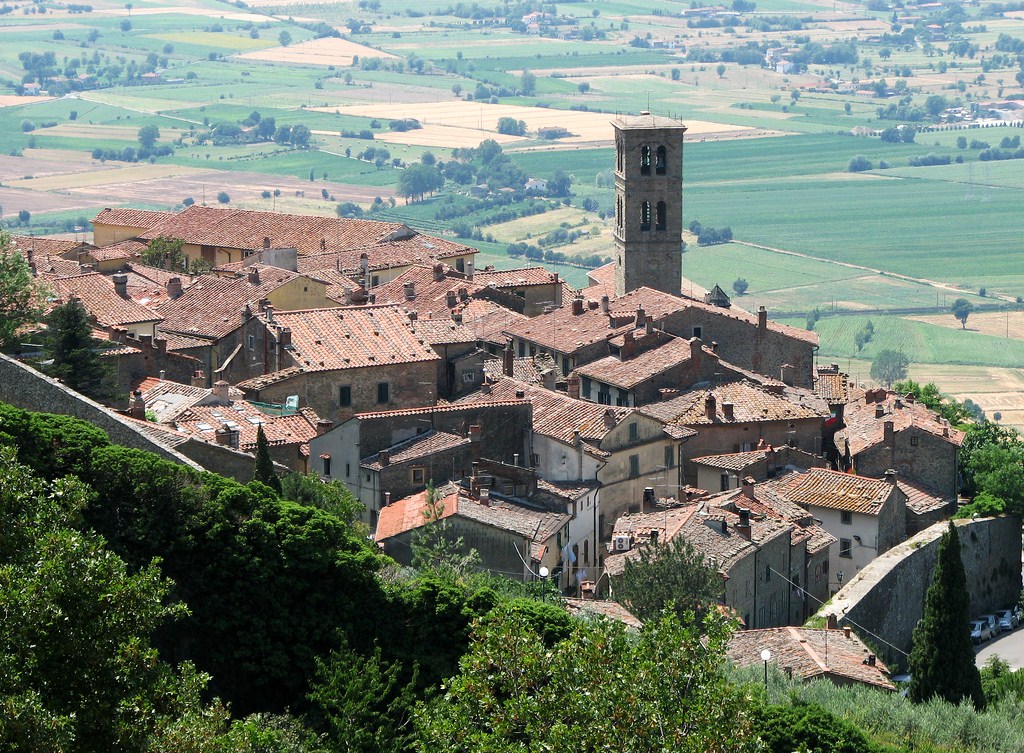
Cortona: Villa Marsili or similar. This intimate hillside stay suits the slower rhythm of the Tuscan chapter, keeping you close to the old town while giving the Journey a warmer, more rooted sense of place.
Other Deluxe hotels we sometimes use: Hotel San Michele, Monastero di Cortona or similar.
“Cortona works best when the hotel has a sense of place. It should feel smaller, warmer, and more rooted in the Tuscan hillside than a grand-city hotel ever could.”HOW WE CHOOSE
Chapter Five
Days 9–11
The Eternal City does not arrive quietly. It appears in domes, ruins, fountains, piazzas, empire, faith, dinner tables and the hum of modern Roman life.
Rome is three days of layers: the Pantheon and piazzas, Vatican City, imperial stones and the everyday beauty of a city that never stopped being alive.
Day 9
The Journey leaves Tuscany and continues south toward the Eternal City. After arriving and checking in near the historic center, join your Tour Captain for a Discovery Walk through Old Rome.
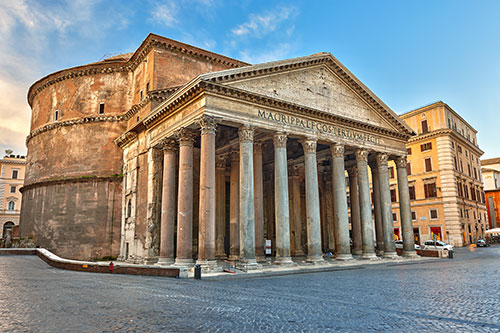
Around the Pantheon, continue through Piazza Navona, Campo de’ Fiori and Largo di Torre Argentina, where stories of emperors, markets, fountains and modern Roman life overlap at street level.
Day 10
Begin with a guided morning in Vatican City, exploring the Vatican Museums and Michelangelo’s Sistine Chapel. When visitor operations and access permit, continue to St. Peter’s Basilica and Square as your guide brings context to the art, ritual and architecture of Vatican City.
The afternoon and evening are intentionally open for independent discovery, with suggestions from your Tour Captain.
This evening, your Tour Captain may invite you to join the group for an optional dinner, or the evening is entirely yours.
Day 11
Set out through Rome’s ancient heart, where ruins and modern life share the same streets. Through the Roman Forum and the surrounding imperial landscape, your guide traces the layers of the ancient city, from Palatine and Capitoline context to triumphal arches and views across the historic center.
Tonight, join your Tour Captain for a Farewell to Rome dinner—a moment to reflect before the Journey turns south toward the coast.
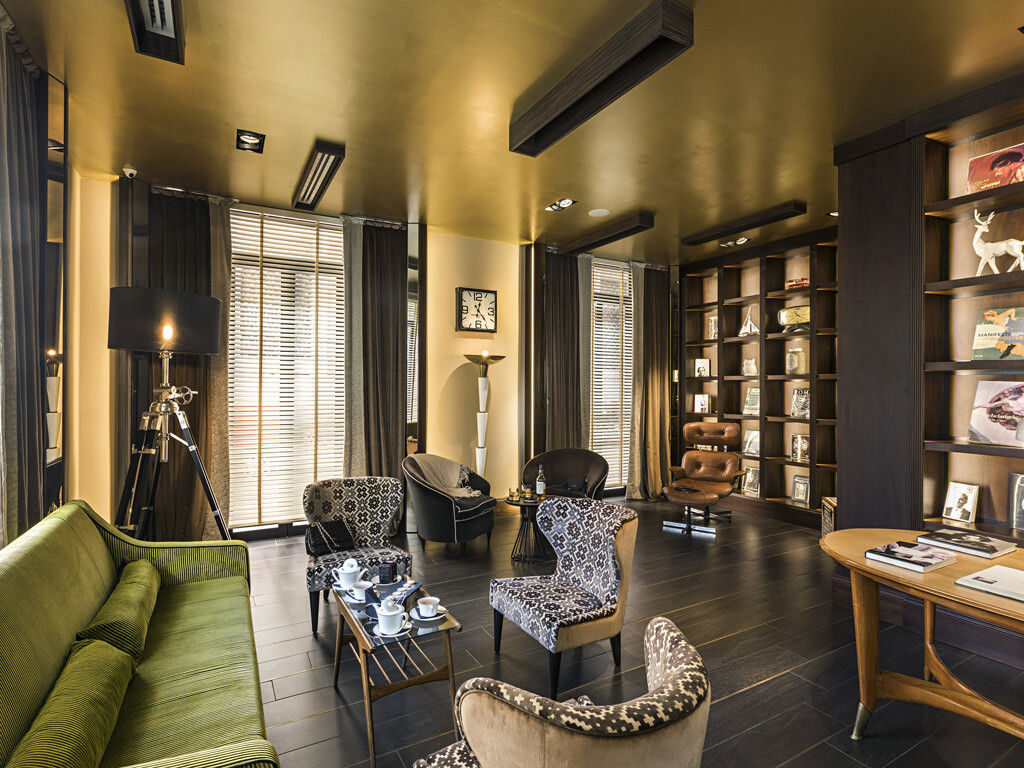
Rome: Palazzo Navona or similar. This central Rome stay keeps the Eternal City close: the Piazza Navona neighborhood, rooftop moments, evening strolls and easy walks toward many of Rome’s great sights.
Other Deluxe hotels we sometimes use: Pantheon Iconic, La Minerva, Hotel L’Orologio or similar.
“Rome rewards location. When your hotel sits near the historic heart, the city stays with you between the guided moments: a fountain at night, a piazza after dinner, a short walk that becomes a memory.”HOW WE CHOOSE
Final Chapter
Days 12–14
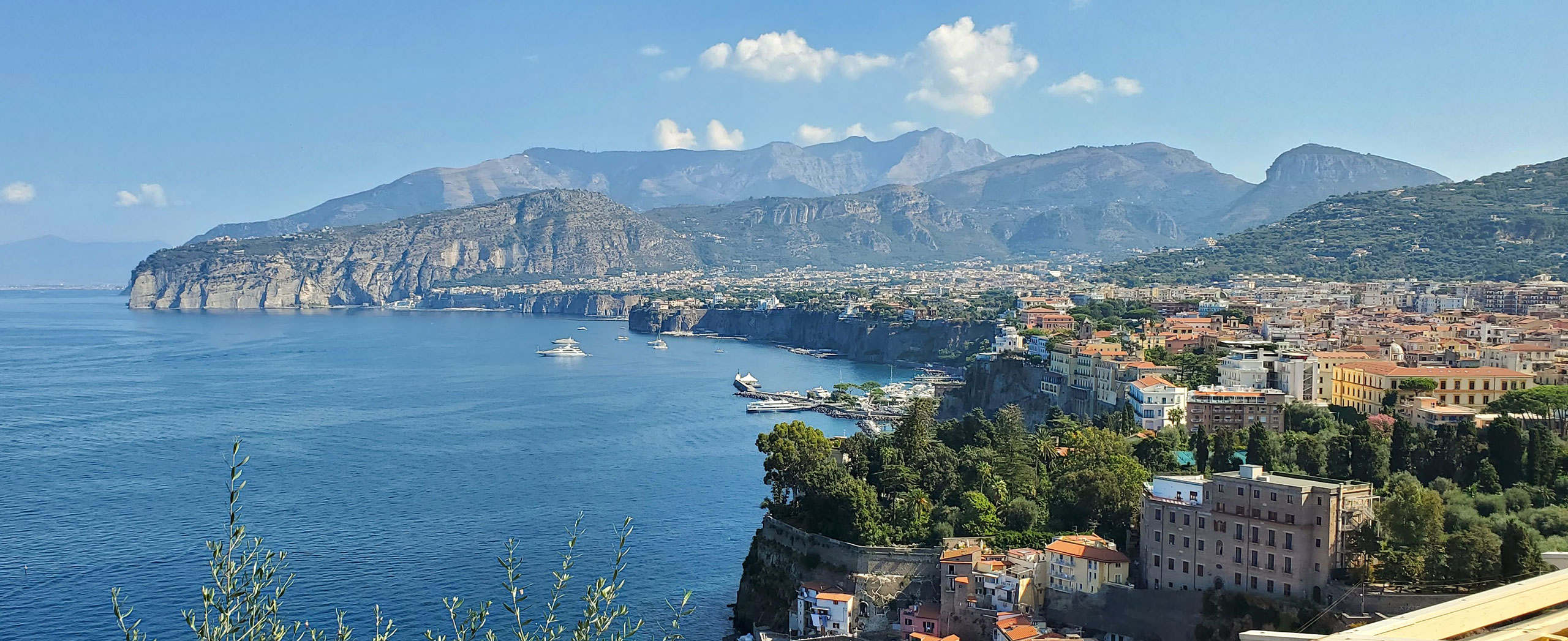
The final chapter turns toward the sea: Pompeii, lemon groves, coastal light, Sorrento evenings and the sense of arrival that only Southern Italy can give.
Pompeii gives the final chapter its ancient depth; Sorrento gives it sea air, open time and room to let the Journey settle.
Day 12
Leave Rome as the Journey turns south toward Pompeii, the ancient Roman city lost for nearly 1,700 years before its rediscovery. With an expert local guide, explore the site and hear the human story behind its dramatic history.
After Pompeii, continue to Sorrento. Following check-in and time to relax, your Tour Captain leads a Discovery Walk into the heart of town, and the final coastal chapter begins beside the Bay of Naples.
Day 13
Today is intentionally open for the coast. Stay in Sorrento, follow your Tour Captain’s recommendations, or let the Sorrento Peninsula unfold at your own pace.
There is no need to schedule the day. The pleasure may be simply wandering, lingering over lunch and letting the Bay of Naples set the pace.
Day 14
As the Journey closes, your Tour Captain or the Now Journey team can assist with practical departure guidance.
An optional transfer to Naples Airport may be requested separately and is not included in the base Journey. The transfer is $125 per person with a minimum of two travelers, or $250 for one traveler. If you would like more time in Southern Italy, ask about extending your stay when appropriate and subject to availability.
Sorrento: Grand Hotel Capodimonte or similar. This coastal stay lets the final chapter soften into the Bay of Naples: sea-view terraces, cascading multi-level pools and the pleasure of ending somewhere made for lingering.
Other Deluxe hotels we sometimes use: Bellevue Syrene, Hilton Sorrento Palace or similar.
“Sorrento should feel like a conclusion, not just a final hotel stop. The views, terraces, pools and sea air help the Journey slow into its last beautiful chapter.”HOW WE CHOOSE
What's included
Thirteen Deluxe hotel nights and 22 included meals—13 full breakfasts, 6 hosted dinners, 2 Italian Apericeni and 1 Tuscan winery lunch with tasting—join expert guides, Tour Captain hosting, admissions and thoughtful transportation.
Deluxe hotels from Lake Como through Sorrento, with a full breakfast each morning.
Six destination dinners and two Italian Apericeni, with the page’s established premium-beverage inclusion.
A family-run estate visit, cellar experience, regional lunch and wine tasting.
Tour Captain hosting, local experts, scheduled admissions, high-speed rail, private boats and road transportation.
Now Journey Hotels Collections
At Now Journey, we believe where you stay should be every bit as memorable as where you go. Our Hotels Collections are curated for location, atmosphere, service and the authentic sense of place each property brings to the Journey.
Signature Collection
The signature Now Journey experience, featuring a thoughtfully curated collection of 4- and 5-star hotels chosen for location, character and comfort. Our 4-star stays feature rooms one category above entry level or higher whenever available; at our 5-star properties, accommodations begin with the hotel’s refined entry-level rooms and extend upward.
Elevated Accommodations
Our signature journey, enhanced with our most elevated hotel accommodations — preferred upper room categories across our 4- and 5-star collection, while the itinerary and experiences remain unchanged.
Curated for character. Chosen for location. Selected for comfort.
Elegant lake stays such as Hotel Villa Belvedere, Grand Hotel Villa Serbelloni, Grand Hotel Cadenabbia or similar, chosen for a prologue of calm and beauty.
Historic palace-style Deluxe stays near San Marco, including Saturnia & International, Monaco & Grand Canal or similar.
Elegant, centrally located Deluxe stays such as Grand Hotel Cavour, Bernini Palace, L'Orologio or similar.
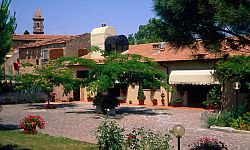
Rustic Tuscan manor houses, villas and hill-town Deluxe properties including Villa Marsili, Hotel San Michele, Monastero di Cortona or similar.
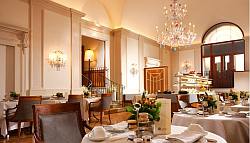
Perfectly placed Deluxe stays near the historic heart, including Palazzo Navona, Pantheon Iconic, La Minerva or similar.
Coastal Deluxe stays such as Grand Hotel Capodimonte, Bellevue Syrene, Hilton Sorrento Palace or similar.
Dates & prices
Prices are per person based on double occupancy. The Grand Journey is the complete Lake Como-to-Amalfi edition of Italy's Great Cities. Solo supplement: $4,990. Deluxe | Elevated is subject to preferred-room and accommodation availability.
If you are comparing options, start here. These departures highlight selected Grand Journey dates and current availability.
Summer brings warm days, long evenings and vivid city energy from north to south.
September brings Tuscany's harvest mood, softer light and some of the year's strongest demand.
Autumn softens the crowds while the cities and coast remain beautifully alive.
One of the best times to be in Italy: moderate temperatures, fewer crowds and a graceful Lake Como opening.
Near-perfect weather, spring color and la dolce vita from the lakes to the coast.
A beautiful early-summer window for Lake Como, Venice, Tuscany, Rome and the coast.
Summer brings warm days, long evenings and vivid city energy from north to south.
September brings Tuscany's harvest mood, softer light and some of the year's strongest demand.
Autumn softens the crowds while the cities and coast remain beautifully alive.
Tell us your preferred season, travel style and hotel collection. We will help you compare Grand Journey dates without pressure.
Guest reviews
Now Journey guests consistently mention the same things: thoughtful planning, seamless logistics, special surprises, beautiful hotels, and the feeling of being genuinely cared for.
"I can't say enough about our recent trip to Italy. It was perfection from beginning to end."Tammy A., Now Journey guest
"We all were made to feel special, almost like royalty, with skip-the-line access, personal service by fabulous chefs, and seamless check-ins at our gorgeous hotels."
Now Journey guest"Every day, every place, every meal, every experience was amazing."
Edward K."Our hotel accommodations were all perfect. Now Journey did an exceptional job planning and we even got surprises along the way."
Tammy A.Frequently asked questions
The essence of the Grand Journey: premium small-group travel from Lake Como to the Amalfi Coast, with a graceful opening, carefully chosen hotels, authentic experiences, and personal support every step of the way.
Small groups typically range from 8 to 12 guests, with a maximum of 16. It's large enough to enjoy the camaraderie of shared travel, yet small enough to remain personal, flexible, and remarkably effortless.
No. Thoughtful pacing is one of the hallmarks of a Now Journey. We leave room to linger, discover, and enjoy each destination without feeling hurried.
Enjoy daily hot breakfasts and select dinners with unlimited premium beverages. Tour Captain invites you on optional dinner nights as well.
No. Groups typically travel in premium vans or luxury micro-coaches depending on group size, and we utilize the Italian Trains on some segments.
Yes. It is ideal for travelers who want the classics with polish and ease, plus the elegance of Lake Como as a true prologue.
Expect moderate walking in historic centers with cobblestones and stairs. Guests should be comfortable walking at a relaxed pace.
Begin your Italian story
You've now seen the hotels, the experiences, the pacing, and exactly how the Journey unfolds.
If this feels like the kind of Italy you've been hoping to experience, we'd love to help you decide if it's the right fit.
No obligation. No pressure. Just a thoughtful conversation about your Italy.
Venice was not created merely as a beautiful refuge on the lagoon. It grew into an independent maritime republic whose merchants, diplomats and ships connected Europe with the eastern Mediterranean and beyond. That exchange brought wealth, rare materials and ideas into a city where trade, government and faith were deliberately staged together.
Seen with that story in mind, St. Mark’s is more than an ornate church and the Doge’s Palace more than a graceful façade. They expressed the confidence of a trading power whose political life unfolded within sight of the water that made it possible. Venice’s beauty was also its public language.
A detail worth noticingLook for the winged lion of St. Mark. It appears across the city as an emblem of Venice and its former republic.
Renaissance Florence was not simply fortunate enough to contain great artists. It created an unusually concentrated world in which merchants, bankers, civic leaders, religious institutions, workshops and ambitious patrons all competed to shape the city. Art and architecture became expressions of faith, status, public pride and new ways of understanding the human figure and the natural world.
That is why Florence can feel so coherent when you walk it. The cathedral, baptistery, palaces, sculpture and streets are not isolated masterpieces; they are parts of an ongoing civic conversation. Knowing this changes the experience from checking off famous works to seeing how creative energy was woven into everyday urban life.
Look forThe way major works address public space: doors face piazzas, sculpture meets the street and Brunelleschi’s dome organizes the skyline.
In Tuscany, food and wine make the landscape legible. Regional cooking grew from what the land, season and household could provide: olive oil, bread, beans, garden vegetables, herbs, cured meats and wines shaped by particular hills and soils. The result is not elaborate for its own sake. Its character comes from restraint, good ingredients and a close relationship between place and table.
A Tuscan meal also follows a different social clock. Conversation matters; courses arrive with room between them; wine is understood alongside food rather than apart from it. That is why this winery visit and lunch are allowed to breathe. The unhurried pace is not empty time around the experience—it is part of the experience.
A detail worth noticingListen for how the hosts describe the estate, the vintage and the meal together. Here, provenance is a family story as much as a label.
Rome rarely presents its history in a neat sequence. An ancient column may be built into a later wall; a Renaissance palace may face a Baroque fountain; a modern street may cross the footprint of an imperial complex. Christian Rome reused, preserved and sometimes transformed the fabric of the ancient city, while later generations added their own ambitions above and beside it.
This is why Rome is best understood as a palimpsest rather than a timeline. The Vatican, the Forum, neighborhood churches and everyday piazzas belong to different eras, yet they remain physically and visually in conversation. As you move through the city, history does not stay behind glass. It keeps interrupting the present.
Look forChanges in street level, reused stone and fragments embedded in later buildings—small clues that another Rome often survives directly beneath or within the one you see.
It is easy to arrive thinking of Pompeii as a field of ruins. The site becomes far more affecting when you picture it as a working city: homes opening onto interior courtyards, shops facing busy streets, public baths, places to eat, workshops, painted walls and messages scratched by ordinary people. These details reveal routines that are unexpectedly recognizable.
The eruption of Vesuvius in AD 79 was catastrophic, but the city’s burial also preserved an extraordinary amount of evidence about daily Roman life. Pompeii’s power comes from that tension. The streets are ancient, yet the human impulses visible in them—commerce, humor, hospitality, display and domestic comfort—feel close. The tragedy matters precisely because the people who lived here stop feeling abstract.
A detail worth noticingWatch for stepping stones across the streets, worn thresholds and traces of painted shop signs. They help turn an archaeological plan back into a lived neighborhood.
Sorrento is a natural finale because it changes both the view and the tempo. The town looks across the Bay of Naples toward Vesuvius, while its terraces, citrus gardens and evening streets hold the coast close without requiring every hour to be scheduled. After the scale of Rome and the intensity of Pompeii, that openness feels earned.
The local passeggiata—the evening ritual of walking, greeting and lingering—captures the rhythm beautifully. You can stay near town, follow the peninsula, look toward the islands or simply let the day remain spacious. Ending here gives the Journey room to become personal again: not one last list of sights, but a final stretch shaped by sea air, conversation and choice.
Look forThe changing relationship between the town and the bay as evening arrives. The water becomes less a backdrop than the quiet center of the finale.